


Introduction
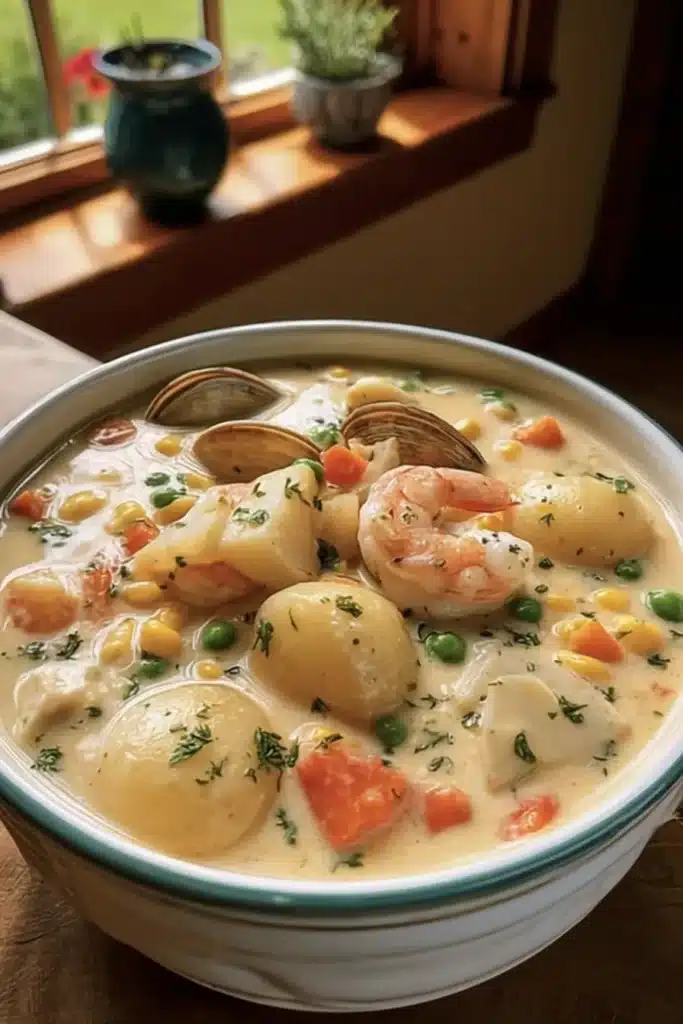
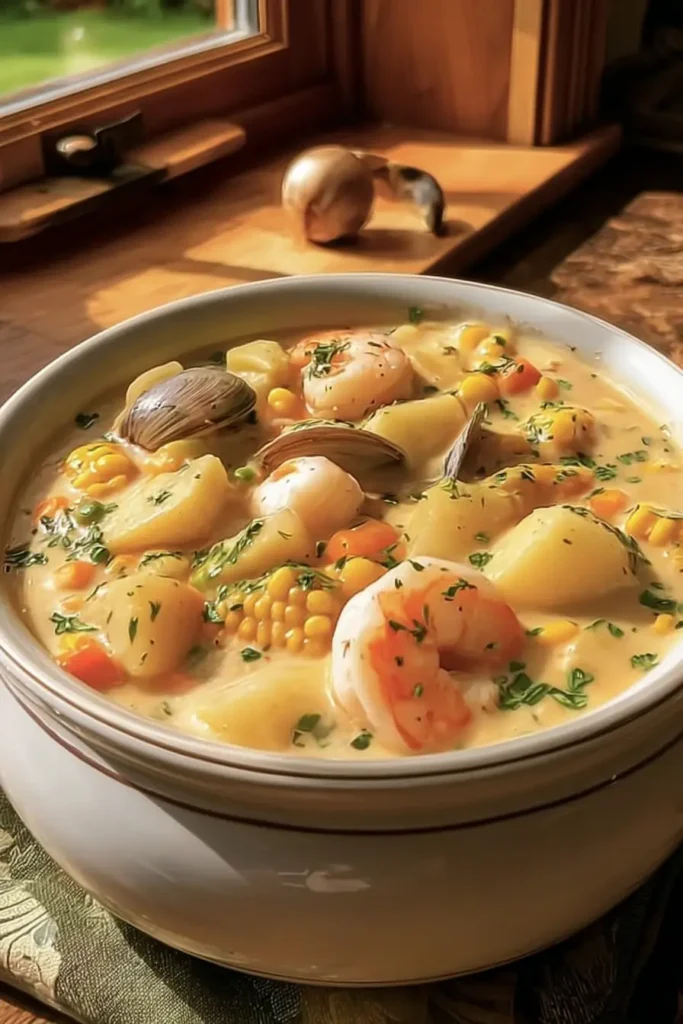
There’s something magical about a bowl of creamy Seafood Chowder—it’s comfort, ocean freshness, and cozy vibes all in one! This isn’t just any chowder, my friends—it’s DA BOMB!!! Every spoonful bursts with shrimp, crab, sweet corn, and buttery potatoes, swimming in a velvety broth that’ll make your heart sing. Whether it’s chilly outside or you’re craving a seaside classic, this Seafood Chowder will wrap you up in a warm hug of flavor. Ready? Grab a spoon, because once you taste this, you’ll never go back to canned soup again!
Reasons You’ll Love This Seafood Chowder
You’re gonna flip for this Seafood Chowder—and here’s why! First off, it’s loaded with rich, creamy goodness without being heavy. The mix of shrimp and crab gives it a fancy restaurant vibe but, guess what? It’s made right in your kitchen! The whole recipe comes together in under 45 minutes—perfect for weeknights when you want something special but don’t have all night. It’s also one of those “back pocket dinner ideas” that never fails to impress guests. The flavor? Ocean-fresh, buttery, with a kiss of Old Bay spice that makes it sing. And let’s be real—it’s comfort food at its finest. Curl up with a bowl, some crusty bread, and just live your best cozy life!

Seafood Chowder
Equipment
- Large soup pot
- Knife and cutting board
- Measuring cups and spoons
- Ladle
Ingredients
- 4 tbsp Butter Unsalted preferred for better flavor control.
- 1 medium Onion Diced for a flavor base.
- 2 stalks Celery Diced, adds crunch and aroma.
- 2 medium Carrots Diced, adds natural sweetness.
- 3 cloves Garlic Minced for rich aroma.
- 4 medium Potatoes Peeled and diced for creamy texture.
- 4 cups Seafood stock Can substitute chicken stock.
- 1 leaf Bay leaf Adds depth to the broth.
- 1 tsp Old Bay seasoning Signature seafood flavor blend.
- 1 cup Heavy cream Creates that luscious texture.
- 1 cup Whole milk Lightens the cream base.
- 0.5 lb Shrimp Peeled and deveined.
- 0.5 lb Lump crab meat Fresh or canned; drained if canned.
- 1 cup Corn kernels Fresh or frozen.
- Salt and black pepper To taste.
- Fresh parsley Chopped, for garnish.
- Lemon wedges Optional, for serving.
Instructions
- Melt butter in a large soup pot over medium heat.
- Add diced onion, celery, and carrots. Cook for 5 minutes until softened.
- Stir in garlic and cook for another minute, being careful not to burn it.
- Add potatoes, seafood stock, bay leaf, and Old Bay seasoning. Bring to a boil, then reduce heat to simmer 12–15 minutes until potatoes are tender.
- Add heavy cream, milk, and corn. Simmer gently for 5 minutes—do not boil.
- Add shrimp and crab meat. Cook until shrimp are pink and opaque, about 3–4 minutes.
- Season with salt and pepper to taste. Remove bay leaf.
- Ladle into bowls, garnish with fresh parsley, and serve with lemon wedges and crusty bread.
Notes
What Makes a Good Seafood Chowder
A top-notch Seafood Chowder has a few must-haves: balance, creaminess, and quality seafood. You want just enough butter and cream to make it silky, but not so much that it feels like you’re eating heavy cream soup. The potatoes and corn bring body and sweetness, while the stock gives it that deep, ocean-like savoriness. The magic really happens when everything melds together—the butter, veggies, stock, and seafood create a symphony of flavor. Use fresh shrimp and lump crab meat if you can—it makes all the difference! Oh, and don’t skip the Old Bay—it’s the secret spice that ties it all together!
Cultural Significance of Seafood Chowder
Seafood Chowder has deep roots along coastal communities—from New England to the Pacific Northwest, and even across the Atlantic in Ireland and Scotland. It’s traditionally a “fisherman’s meal,” born from using whatever fresh catch came in that day. Chowder started humble, with fish, potatoes, onions, and milk or cream. But over time, it became a celebrated dish symbolizing warmth, family, and seafaring life. It’s that go-to comfort dish you’ll find in seaside taverns, served with stories of the sea. I love how this dish connects people—rich, poor, sailor, or home cook—it’s a bowl that unites everyone who loves good, honest food.
History of Seafood Chowder
The word “chowder” likely comes from the French “chaudière,” meaning cauldron. Fishermen in the 18th century would gather around big pots, tossing in fish, salt pork, and biscuits to create a hearty meal at sea. When settlers brought the recipe to America, it evolved—especially in New England, where creamy clam chowder became a household name. Over the years, regional versions popped up: tomato-based Manhattan chowder, corn-filled Midwestern versions, and our beloved creamy seafood chowder that features shrimp and crab. It’s a history steeped in simplicity and flavor—one that keeps evolving but never loses its soul.
Ingredients for Seafood Chowder
Here’s what you’ll need to whip up this creamy dream:
- 4 tbsp butter
- 1 medium onion, diced
- 2 celery stalks, diced
- 2 medium carrots, diced
- 3 garlic cloves, minced
- 4 medium potatoes, peeled and diced
- 4 cups seafood stock (or chicken stock)
- 1 bay leaf
- 1 tsp Old Bay seasoning
- 1 cup heavy cream
- 1 cup whole milk
- ½ lb shrimp, peeled and deveined
- ½ lb lump crab meat
- 1 cup corn kernels (fresh or frozen)
- Salt and black pepper, to taste
- Fresh parsley, chopped (for garnish)
- Lemon wedges (optional, for serving)
Equipment You’ll Need
You don’t need a fancy setup—just:
- A large soup pot
- A sharp knife and cutting board
- Measuring cups and spoons
- A ladle for serving
Instructions for Making Seafood Chowder
- In a large pot, melt the butter over medium heat. Add diced onion, celery, and carrots. Cook for about 5 minutes, stirring occasionally, until softened and fragrant.
- Toss in the garlic and cook for one more minute—don’t let it burn!
- Add the diced potatoes, seafood stock, bay leaf, and Old Bay seasoning. Bring everything to a boil, then reduce the heat and let it simmer for 12–15 minutes, until the potatoes are tender.
- Stir in the heavy cream, milk, and corn. Simmer gently for another 5 minutes (but don’t let it boil—you want that silky texture!).
- Add shrimp and crab meat. Cook for about 3–4 minutes until the shrimp turn pink and opaque.
- Season with salt and pepper to taste, remove the bay leaf, and you’re done!
- Ladle that golden, creamy goodness into bowls, sprinkle with parsley, and serve with lemon wedges and crusty bread.
See? I told you—it’s easier than it looks! Try it once, and you’ll be hooked.

How to Tell When Seafood Chowder Is Done
You’ll know your Seafood Chowder is ready when the shrimp are perfectly pink and curled, the crab has gently flaked apart, and the potatoes are fork-tender. The broth should be rich and creamy, coating your spoon but not thick like gravy. Another telltale sign? That irresistible aroma filling your kitchen—sweet seafood, buttery cream, and warm spice from the Old Bay. If your chowder has a velvety consistency and the seafood is juicy (not rubbery), congratulations, chef—it’s done! Don’t overcook those shrimp, though—they only need a few minutes to go from tender to tough.
Variations and Toppings for Seafood Chowder
Oh, here’s where you can really get creative! While the classic shrimp-and-crab combo is incredible, you can totally mix it up based on what you’ve got on hand.
- Swap shrimp for scallops or chunks of white fish (like cod or haddock) for a different texture.
- Add chopped clams or mussels for a more traditional chowder flair.
- Feeling fancy? Stir in a splash of dry white wine when cooking the veggies—it adds a subtle depth that’ll make your taste buds dance!
- Want it extra hearty? Stir in a handful of crispy bacon or pancetta bits for a smoky edge.
- Top each bowl with shredded cheddar or a drizzle of chili oil for a flavor boost.
- And don’t skip the parsley and lemon—they brighten up the whole dish.
See? You can make this Seafood Chowder your own masterpiece—no two pots ever need to be the same!
Nutritional Insights
This Seafood Chowder may be creamy, but it’s surprisingly balanced! A serving packs in about 350–400 calories, with plenty of protein from shrimp and crab. You’re getting omega-3 fatty acids, vitamin B12, and minerals like zinc and selenium—all great for heart and brain health. The veggies and potatoes add fiber and natural sweetness, while the cream gives that indulgent touch we all crave. Want to lighten it up? Use half-and-half instead of heavy cream or swap the butter for olive oil. But honestly, a little indulgence now and then is good for the soul, right?
Pro Tips and Tricks for the Best Seafood Chowder
- Don’t boil after adding cream. This one’s key! Boiling makes the dairy separate, leaving you with a grainy texture instead of that dreamy smoothness.
- Use fresh seafood if possible. Frozen works, but thaw it completely and pat it dry before cooking—it’ll help keep your broth from getting watery.
- Cook seafood last. Always! Adding it too early overcooks it, turning your shrimp rubbery and your crab stringy.
- Season in layers. Salt a little at each stage—veggies, stock, and cream—to build rich, deep flavor.
- Add a touch of acid. A squeeze of lemon at the end balances the richness and lifts all the flavors.
- Make it ahead. Like most chowders, this one tastes even better the next day! The flavors blend beautifully overnight—just reheat gently.
- Serve with crusty bread. Because soaking up that creamy broth is half the joy!
Trust me on these—follow these little secrets, and you’ll have a chowder that rivals any coastal café!
My Take on Seafood Chowder
I’ve made this Seafood Chowder more times than I can count, and honestly, it never fails me. I personally have a preference for using both shrimp and crab—it gives the perfect mix of sweetness and texture. The buttery broth reminds me of seaside dinners with my family, cozy and full of laughter. Sometimes I even throw in leftover salmon bits, and oh WOW—it’s incredible! The best part is how easy it is to make for guests; it looks fancy but requires minimal effort. Try it once, and I bet it’ll become one of your “back pocket” recipes too!
Storage and Health Tips
Got leftovers? Lucky you! Let the chowder cool completely, then transfer it to airtight containers and refrigerate for up to 3 days. When reheating, do it slowly on low heat—no boiling, or the cream might separate. You can also freeze it (though I prefer fresh) for up to 2 months. If freezing, skip adding seafood until you reheat—it stays juicier that way. For a lighter version, swap heavy cream with coconut milk—it’s dairy-free and gives a fun twist! Oh, and if you’re watching sodium, use low-sodium stock and go easy on the seasoning. Healthy comfort food? You bet!
FAQs about Seafood Chowder
1. Can I make Seafood Chowder ahead of time?
Absolutely! In fact, it tastes even better the next day after the flavors have mingled. Just reheat gently before serving.
2. What’s the best seafood for chowder?
Shrimp, crab, scallops, or mild white fish like cod or haddock all work great. Use what’s freshest or most affordable!
3. Can I make this chowder without cream?
Yep! Substitute half-and-half, evaporated milk, or coconut milk for a lighter, non-dairy version.
4. How do I thicken chowder if it’s too thin?
Mash a few potatoes in the pot or stir in a slurry of cornstarch and water—it’ll thicken without changing the flavor.
5. Why is my chowder grainy?
It likely boiled after adding the cream. Always keep the heat gentle once dairy goes in.
6. What goes well with Seafood Chowder?
Crusty bread, oyster crackers, a green salad, or even a chilled glass of white wine. Yum!
7. Can I use canned seafood?
You can, but fresh or frozen tastes way better. If you must use canned crab, drain it well before adding.
8. How can I make it spicy?
Add a pinch of cayenne pepper or a dash of hot sauce—simple but fiery!
Before You Go
And there she is—my Seafood Chowder, creamy, dreamy, and oh-so-satisfying! Try it once and you’ll see why it’s become a staple in my kitchen. If you loved this cozy bowl of comfort, don’t miss my other seafood favorites like Honey Soy Salmon Rice Bowls and Fish Casserole with Creamy Vegetables.
Don’t forget to share your chowder creations with me—I love seeing your photos! Join our Facebook community group and follow me on Pinterest for more mouthwatering recipes. Until next time, cook clever, eat happy, and keep that ladle handy—you’re gonna need it for seconds!


Leave a Comment